There are moments in life when you believe you are beginning something new. And then there are moments when you realise you have simply found your way back to where you always belonged.
My journey with Sunaayy Foundation is one such story. It did not begin with Sunaayy. It began over a decade ago, in 2013, as a researcher with the Social Informatics Research Group at the Indian Institute of Management Calcutta. We were asking a question that many had considered impossible to answer:
Could technology help bridge the learning divide between urban and rural India—not by replacing teachers, but by connecting those who had knowledge with those who had the least access to it? The answer lay in an unlikely partnership.
Across cities lived hundreds of retired teachers and elderly individuals who still carried with them decades of experience, patience, and an enduring desire to teach. Across rural India were children whose curiosity was immense but whose access to quality education was limited. We wondered whether an online learning platform could bring these two worlds together.
Our early experiments began in rural West Bengal. What followed surprised even us.
Children showed remarkable improvements in foundational literacy and numeracy. They became more confident, curious, and eager to learn. Equally striking was the transformation among our elderly teachers. Many spoke of rediscovering purpose after retirement. They were no longer simply volunteers; they became mentors, storytellers, grandparents, and companions to children they had never met in person.
Education was improving. But so was wellbeing—on both sides of the screen. That research slowly became something much larger than an academic project.
We realised that meaningful change could not remain confined to a research paper or a pilot programme. It needed an institution that could nurture it, improve it, and sustain it over time. This led to the creation of NexConnect Ventures Pvt. Ltd., a social enterprise built around the idea of connecting underserved learners with experienced educators through technology.
One of our earliest partners was Sunaayy Foundation. At that time, Sunaayy was already working with communities that mainstream education often failed to reach. Together, we found an opportunity to extend our experiment beyond West Bengal.
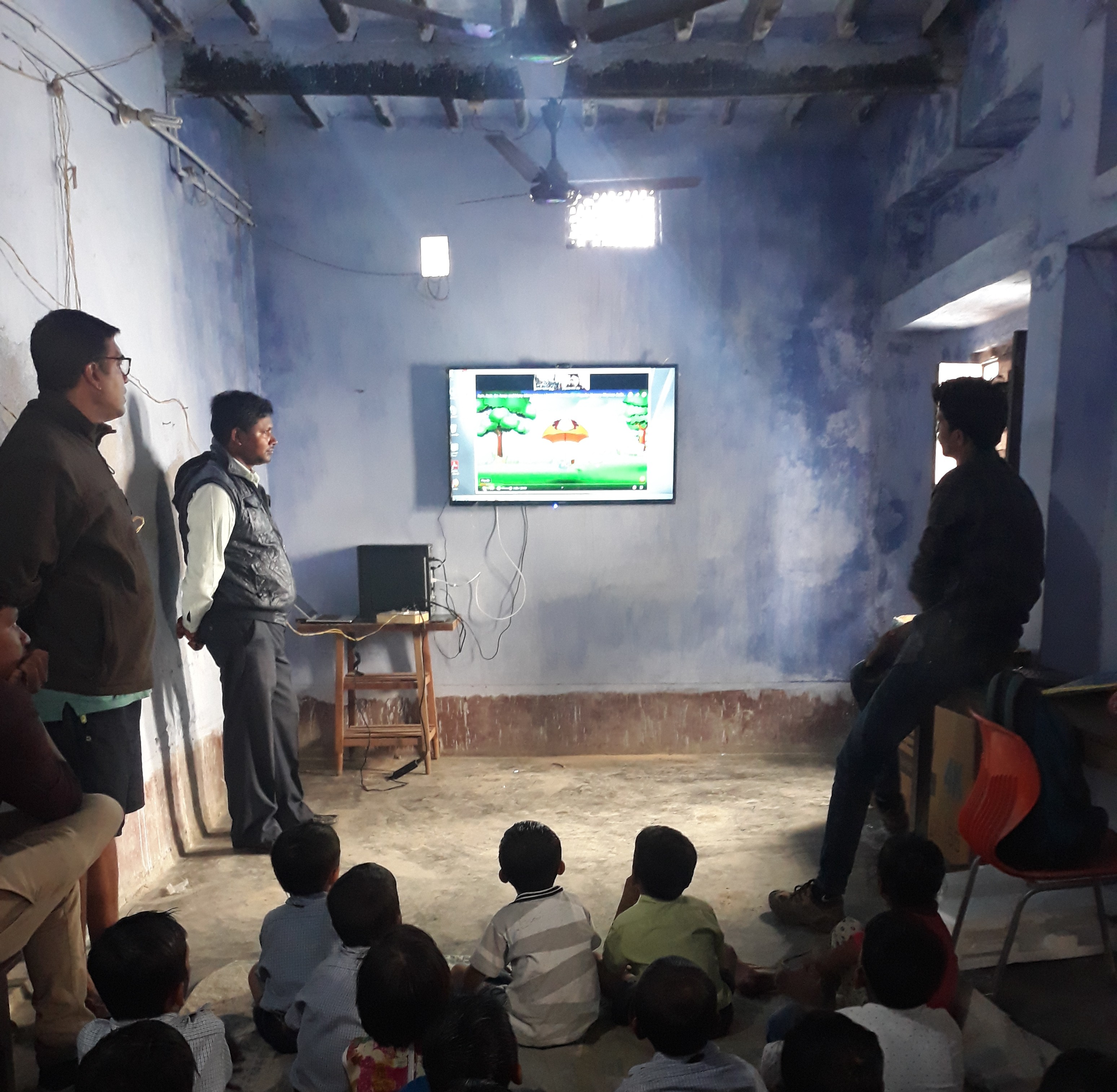
Our first learning centre outside the state came up in a village in Bihar. We called it the Internet Learning School.
The centre was managed by Nishant, one of Sunaayy’s trustees, and every day more than fifty children from surrounding villages gathered there. Many of them were first-generation learners. Their enthusiasm was infectious. They arrived each day carrying notebooks, endless questions, and dreams much larger than their circumstances.
Before designing lessons, we spent time understanding who these children were.
What excited them?
Where were they struggling?
What language did they think in?
What kind of support did they truly need?
Based on these observations, we began developing customised learning materials rather than relying on standard textbooks alone. Retired teachers from Kolkata conducted regular online English and Mathematics classes through our learning platform. But learning extended far beyond academics.
We organised “grandparenting sessions” where elderly volunteers shared stories from their lives, recited poems, sang songs, discussed values, and simply spent time listening to children. Those sessions became some of our favourites. The classroom became a space where learning, laughter, imagination, and emotional connection existed together. Looking back today, I realise we were not merely teaching subjects. We were building relationships across generations. We were proving that education could be deeply human, even when enabled by technology.
Then life happened. The COVID-19 pandemic changed everything. Like many organisations and individuals working in the social sector, we faced challenges that fundamentally altered our path. Circumstances eventually compelled me to close NexConnect Ventures.
For a while, my work took different directions. I joined development organisations, taught in colleges, worked on research, and continued learning in new ways. Professionally, life remained fulfilling. Yet somewhere, quietly, I carried the feeling that I had left behind something unfinished.
The classrooms.
The children.
The conversations.
The simple joy of watching a child discover confidence through learning.
Years passed.
Then, in 2025, my phone rang.
It was Sunaayy Foundation.
Sometimes a single conversation changes the direction of your life.
That call did. As I reconnected with the organisation, I discovered something that filled me with immense gratitude. While I had stepped away, Sunaayy had never stopped. The single learning centre where we had once experimented had quietly grown into a network of thirteen community learning centres across Bihar, Jharkhand, Uttar Pradesh, and Delhi.
The vision had not disappeared. It had grown. Returning felt less like joining a new organisation and more like coming home. Today, I once again find myself doing what first inspired me over a decade ago.
Working alongside teachers.
Designing curriculum.
Strengthening foundational literacy and numeracy.
Introducing functional English.
Creating joyful classrooms.
Supporting teacher development.
Exploring how children’s wellbeing and learning can grow together.
And perhaps most importantly, continuing to learn from the communities themselves.
Every classroom reminds me that meaningful education is not built through curriculum alone.
It is built through trust.
Through listening.
Through consistency.
Through believing that every child, regardless of where they are born, deserves the opportunity to realise their potential.
As Sunaayy continues expanding its learning centres and strengthening educational opportunities for underserved children, I feel incredibly fortunate that my journey has become intertwined with this mission once again.
People often ask whether returning to this work was a difficult decision.
For me, it wasn’t.
Some passions never really leave us.
Sometimes they simply wait patiently until life gives us another chance.
For me, Sunaayy Foundation was that chance.
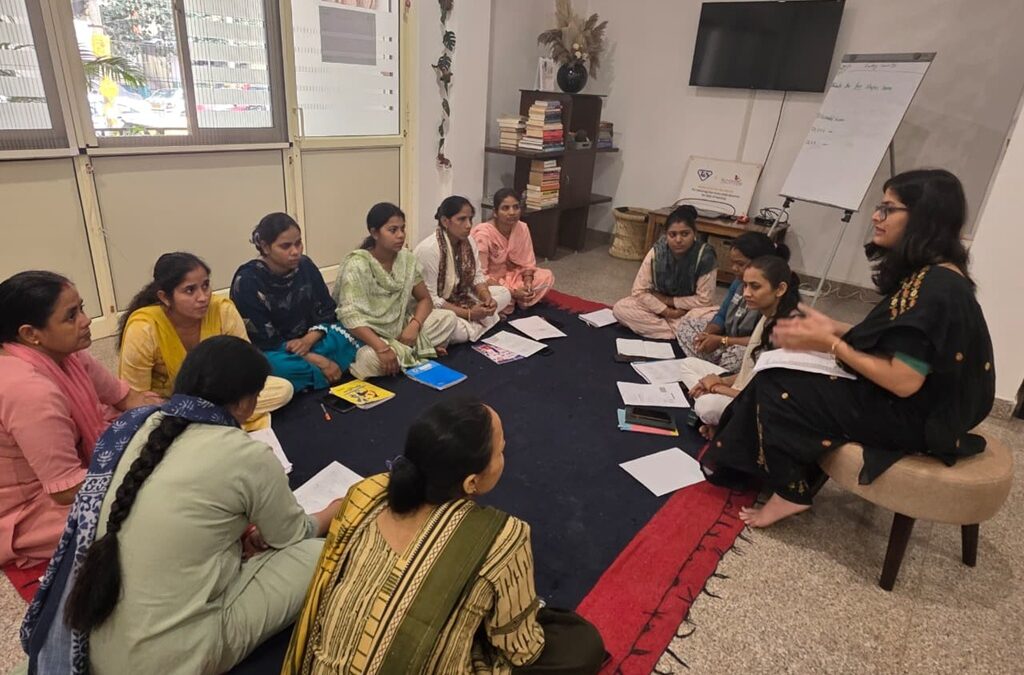
And as I look ahead, my hope is simple: to continue building learning spaces where children are not only educated but empowered; where teachers continue to grow alongside their students; and where women and communities become active partners in shaping the future of education.
Because every child deserves someone who believes in them.
And sometimes, all it takes is one classroom, one teacher, and one opportunity to change the course of a life.
Perhaps, in many ways, that is exactly what happened to mine.